
The Code You Write Today Won't Exist in 3 Years
AI isn't coming for your job—it's coming for your codebase. Here's what that actually means for engineers who want to stay relevant.
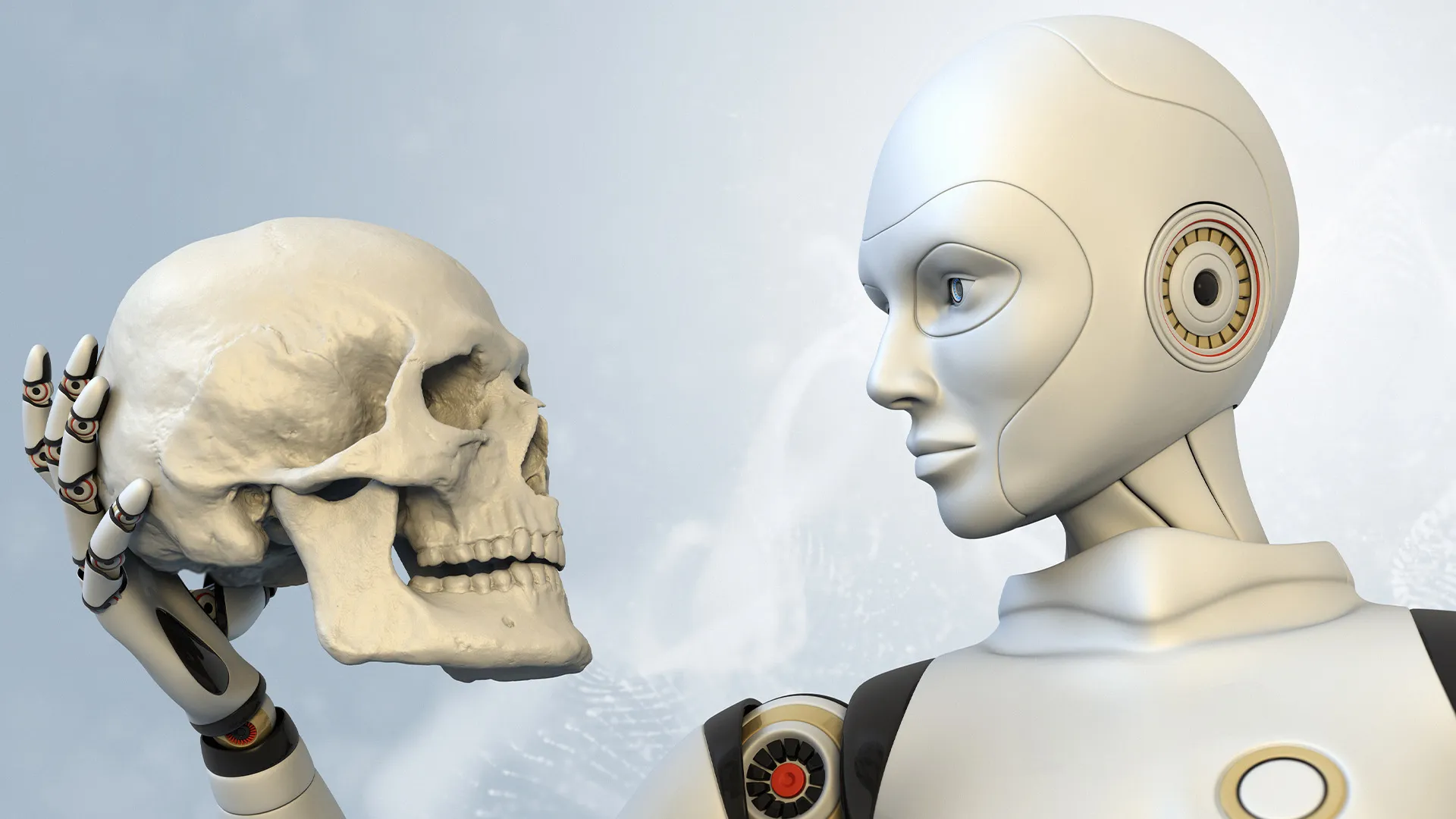
Your Code Has an Expiration Date
Let me be blunt: most of the code sitting in production right now will be rewritten, refactored, or completely replaced by AI-assisted systems within 36 months.
This isn't doom-and-gloom speculation. It's pattern recognition from watching three major technology shifts unfold—and this one moves faster than anything we've seen before.
But here's what the clickbait headlines won't tell you: this is actually good news for engineers who understand what's happening.
The Real Threat Isn't Job Loss
Every few months, another breathless article declares that software engineering is dead. GPT-4 can write code! Claude can debug! GitHub Copilot is replacing junior developers!
The reality is more nuanced—and more interesting.
AI isn't replacing engineers. It's compressing the value chain. Tasks that took hours now take minutes. Boilerplate that required a junior developer now requires a prompt. Code review that needed senior eyes can be pre-filtered by AI.
This doesn't eliminate engineering jobs. It eliminates certain types of engineering work while creating explosive demand for others.
The engineers who thrive will be those who understand the difference.
What's Actually Disappearing
Let's be specific about what AI is genuinely threatening:
1. Pure Implementation Work
If your job is taking well-specified requirements and converting them to code, you're in the danger zone. AI excels at this. Give Claude a clear spec and it'll produce working code faster than any human.
// This kind of work is being automated rapidly
interface UserDTO {
  id: string;
  email: string;
  createdAt: Date;
}

function mapUserToDTO(user: User): UserDTO {
  return {
    id: user.id,
    email: user.email,
    createdAt: user.createdAt,
  };
}
Boilerplate, data transformations, CRUD operations, basic API endpoints—AI handles these competently today.
2. Documentation-Dependent Coding
If you primarily work by reading documentation and translating it into implementation, AI does this better. It's read more documentation than you ever will.
3. Pattern-Matching Development
"I've seen this problem before, here's the standard solution." AI has seen the problem a million times and knows every variation of the standard solution.
What's Becoming More Valuable
Here's where it gets interesting. As AI handles the predictable work, human engineers become more valuable for everything else:
1. System Design and Architecture
AI can write components. It struggles to design systems. Understanding how pieces fit together, anticipating scaling challenges, making technology choices that account for team capabilities and business constraints—this remains deeply human work.
At Ember Studios, we've found that AI actually increases the value of strong architecture. When you can generate code faster, the cost of architectural mistakes compounds more quickly.
2. Problem Discovery
AI solves problems you give it. It doesn't identify which problems are worth solving. The engineering skill of looking at a business situation and recognizing the technical opportunity—that's becoming a superpower.
3. AI Orchestration
This is the big one. The engineers who learn to effectively direct, validate, and integrate AI-generated code are 10x more productive than those who don't. It's a new skill that barely existed two years ago.
// The future isn't AI OR humans—it's this:
const solution = await aiAssistant.generateImplementation(spec);
const validated = await humanEngineer.reviewArchitecture(solution);
const refined = await aiAssistant.applyFeedback(validated.feedback);
const production = await humanEngineer.integrateWithSystem(refined);
4. Edge Cases and Judgment Calls
AI optimizes for the common case. Real systems live and die on edge cases. When the database is down, the third-party API returns garbage, and the user is doing something no one anticipated—that's when human engineering judgment matters most.
The 36-Month Rewrite
So why did I say your code won't exist in 3 years?
Because we're entering an era where code becomes cheaper to regenerate than maintain. When AI can produce a feature in hours instead of weeks, the calculus of "fix vs. rebuild" shifts dramatically.
Organizations will increasingly:
- Regenerate instead of refactor — Why spend days untangling legacy code when AI can reimplement the functionality?
- Treat code as disposable — The spec becomes the source of truth, not the implementation
- Iterate faster — Throw away and rebuild becomes viable for major features, not just prototypes
This isn't speculation. We're already seeing this pattern with our clients. Codebases that would have been maintained for 5-7 years are being scheduled for AI-assisted rewrites at 2-3 year intervals.
How to Position Yourself
If you're an engineer reading this, here's the practical playbook:
Stop optimizing for:
- Typing speed
- Memorizing syntax
- Being the person who "knows the codebase"
- Pure implementation velocity
Start optimizing for:
- System thinking and architecture
- Business domain understanding
- AI tool proficiency (seriously, get good at prompting)
- Communication and problem framing
- Judgment and taste in technical decisions
The Engineers Who Will Thrive
The best engineers have always been more than coders. They're problem solvers, system thinkers, and translators between business needs and technical possibilities.
AI doesn't diminish this. It amplifies it.
When you can generate code 10x faster, the bottleneck shifts to knowing what to build and how it fits together. These are deeply human skills that become more valuable, not less.
The engineers who embrace this shift—who learn to work with AI as a powerful tool rather than competing against it—will be more productive and more valuable than any previous generation of developers.
The engineers who insist on writing every line by hand, who refuse to adapt their workflow, who see AI as a threat rather than a lever—they're the ones who should be worried.
The Bottom Line
Your code has an expiration date. That's not a crisis—it's an opportunity.
The question isn't whether AI will change software engineering. It already has. The question is whether you'll be the engineer directing the AI or the engineer being replaced by it.
At Ember Studios, we've rebuilt our entire development process around AI-augmented engineering. Our teams ship faster, iterate more, and deliver better results than we did two years ago—with the same people.
The future belongs to engineers who can think, design, and direct—not just code.
Which kind of engineer are you going to be?